01Introduction
Queen’s Forgotten Library.
Exploring literature through space, storytelling and intelligent creative workflows.
03 · Independent digital product innovation

02The digital experience
Literature as a space.
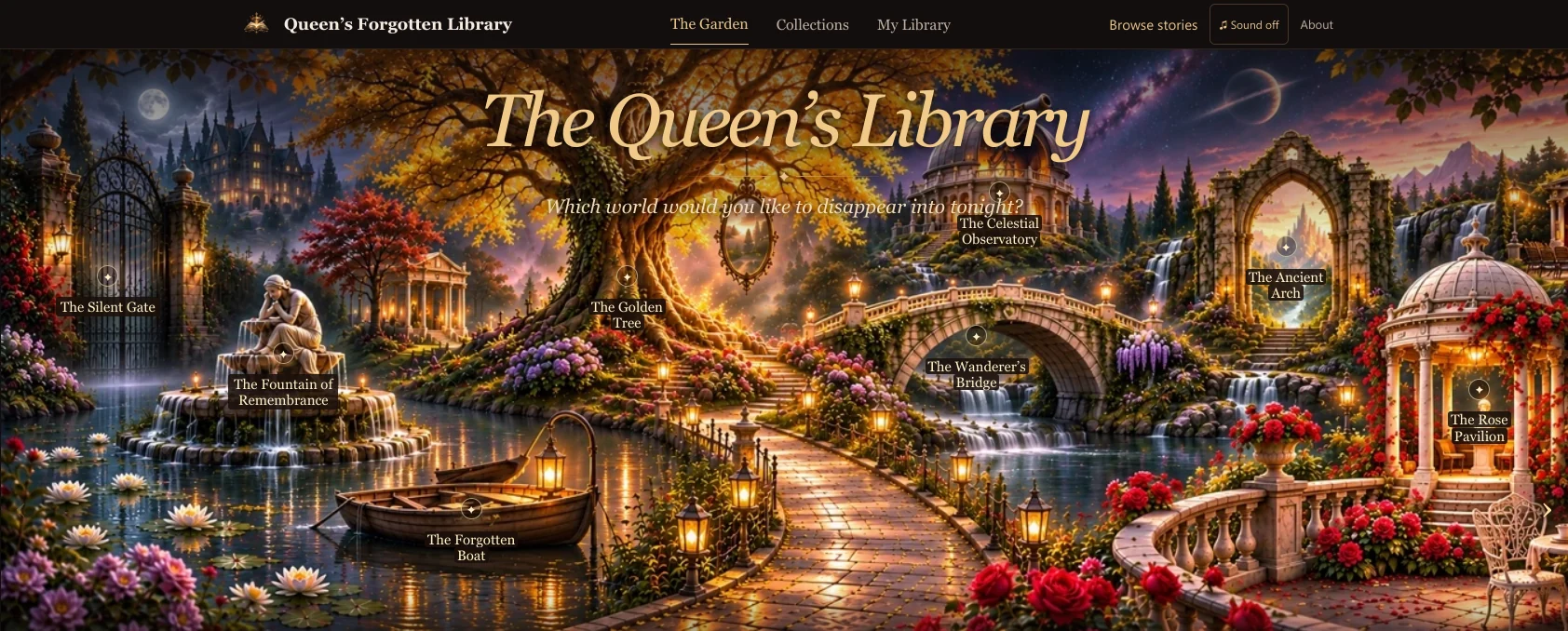
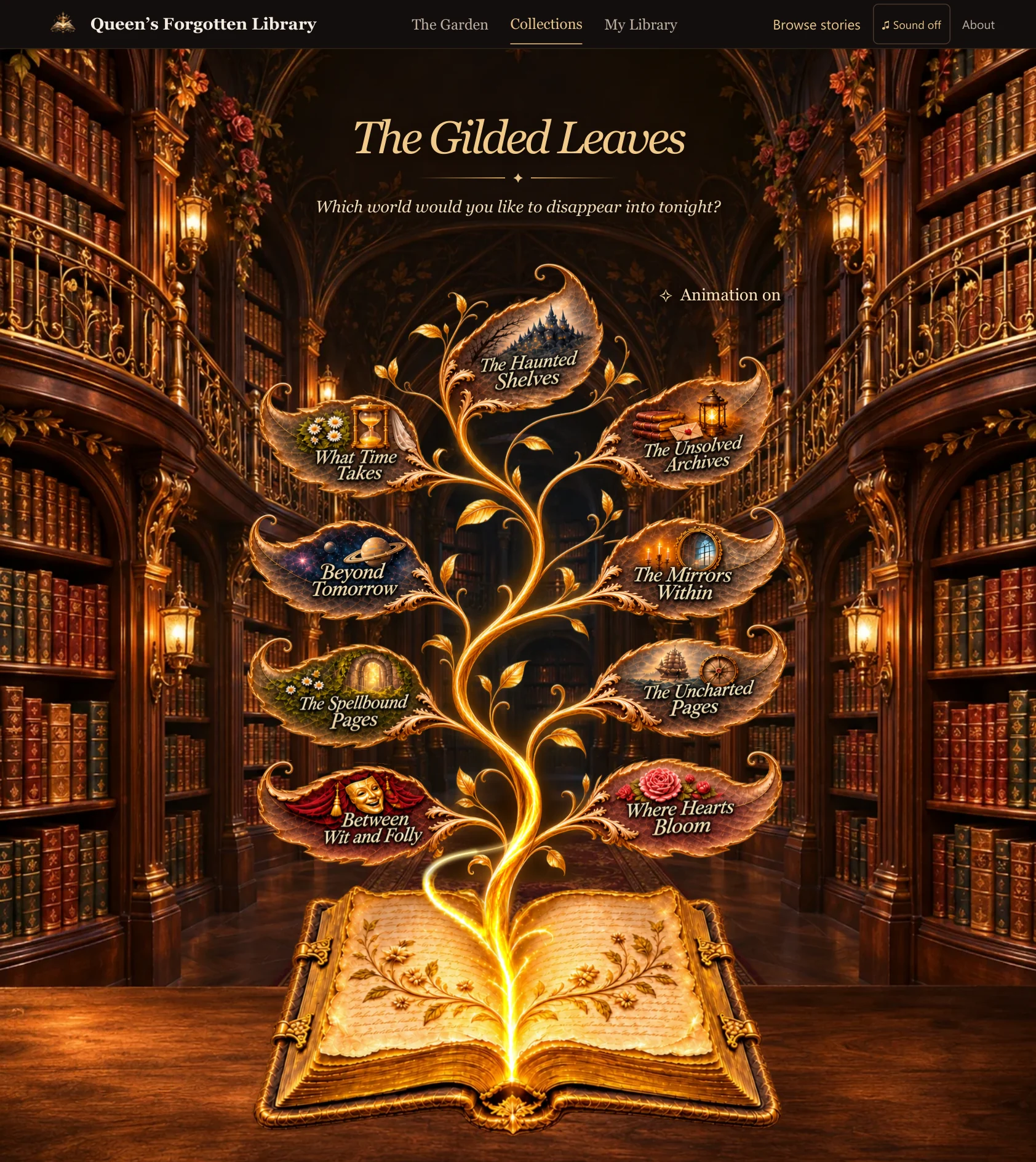
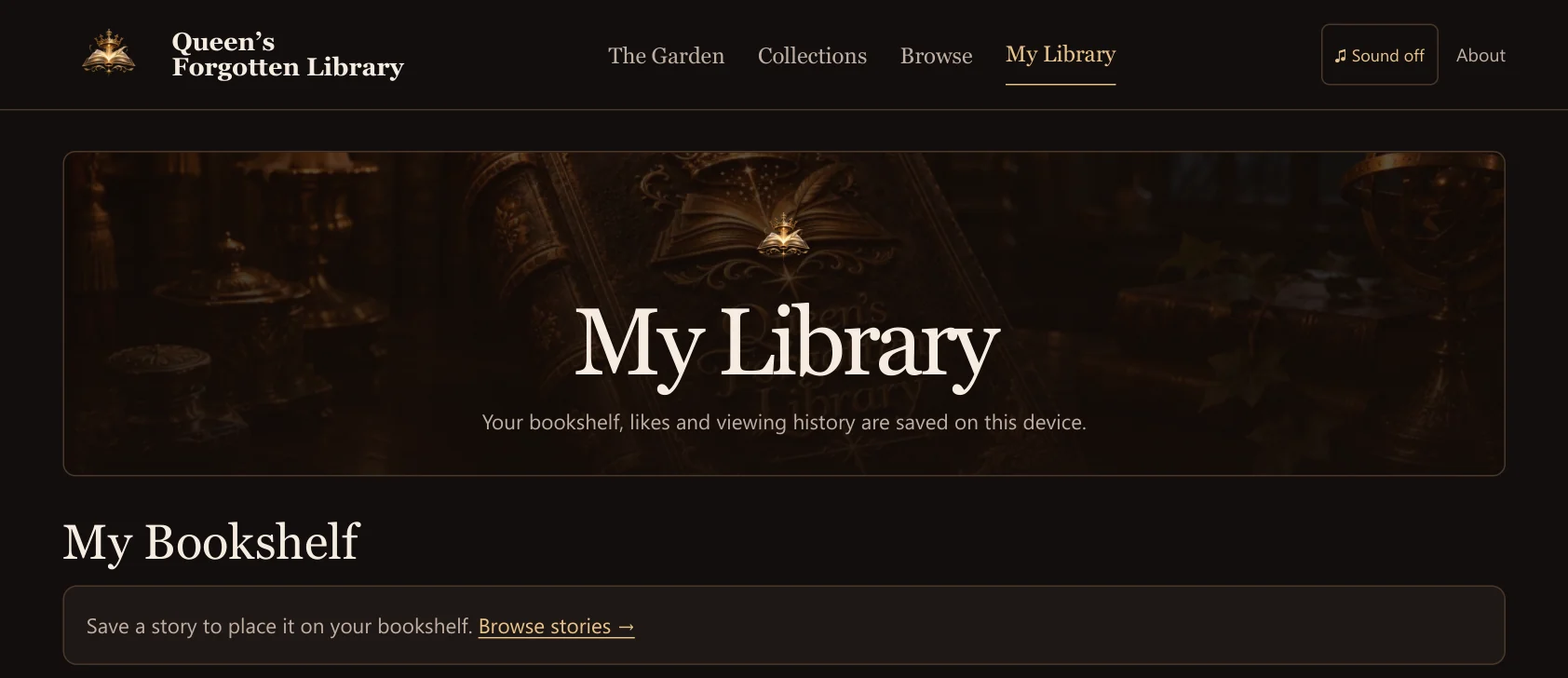
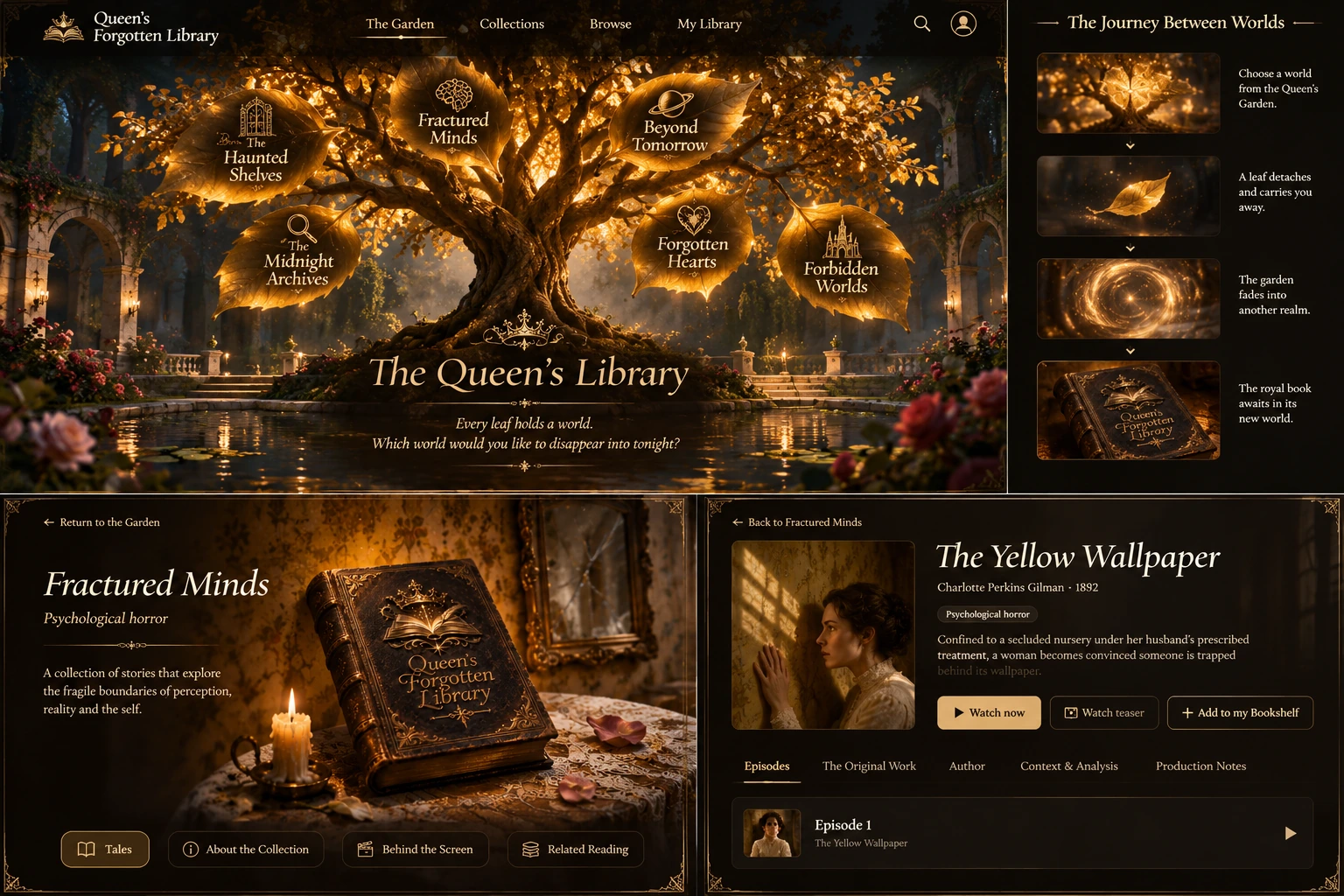
The library itself: a digital platform where stories are discovered by moving through places — a garden, a hall of collections, a personal shelf — rather than by scrolling a list.
 Open full size
 Open full size
 Open full size
 Open full size
 Open full size
capture 01 of 05
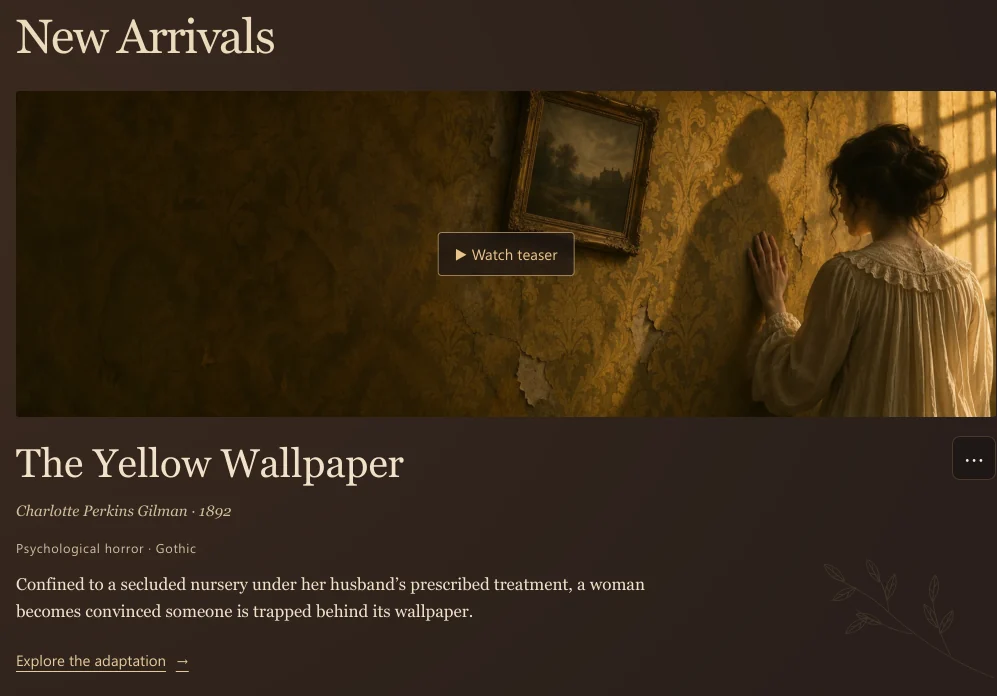
The first four images show the existing ChatGPT-hosted prototype; the fifth is an early interface concept, not a deployed interface. Personal viewing history excluded.
03The creative process
From page to screen.
How each literary production is made, from source text to published episodes. Select a stage to explore its methodology.
- Research
- Adaptation
- Visuals
- Editing
- Publication & Distribution
01 · Research
Every adaptation begins with the source text and the world it came from.
Literary research
Reading the source closely, with its critical context.
Historical context
Placing the story in its period, setting and the author’s world.
Thematic analysis
Identifying the themes the adaptation must carry.
Interpretation
Choosing the reading of the story the adaptation will tell.
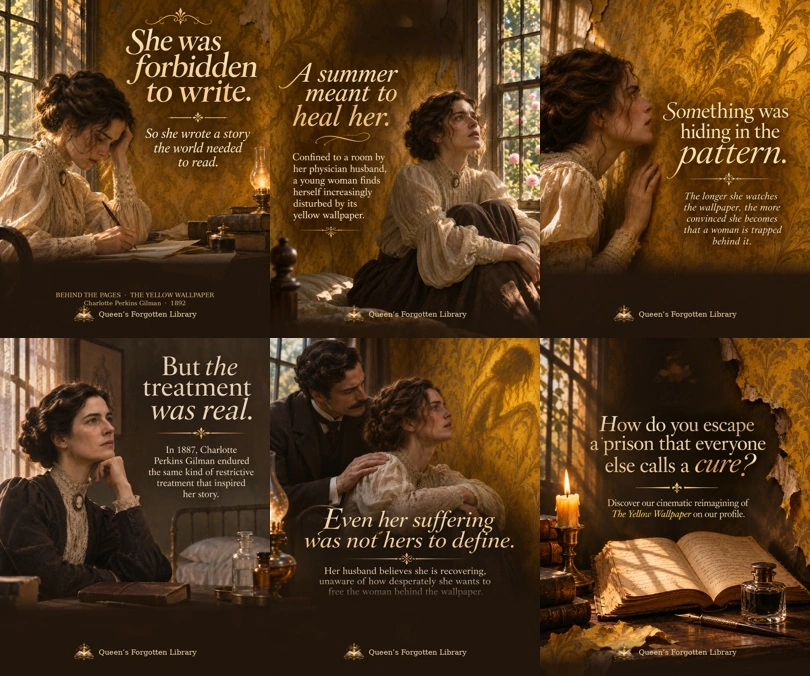
Evidence
Research materials
 Open full size
02 · Adaptation
The story is reshaped for the screen as a sequence of episodes.
Narrative development
Shaping the source into a visual narrative.
Episode structure
Dividing the story into episodes, each with its own arc.
Scripts
Writing scenes, narration and dialogue.
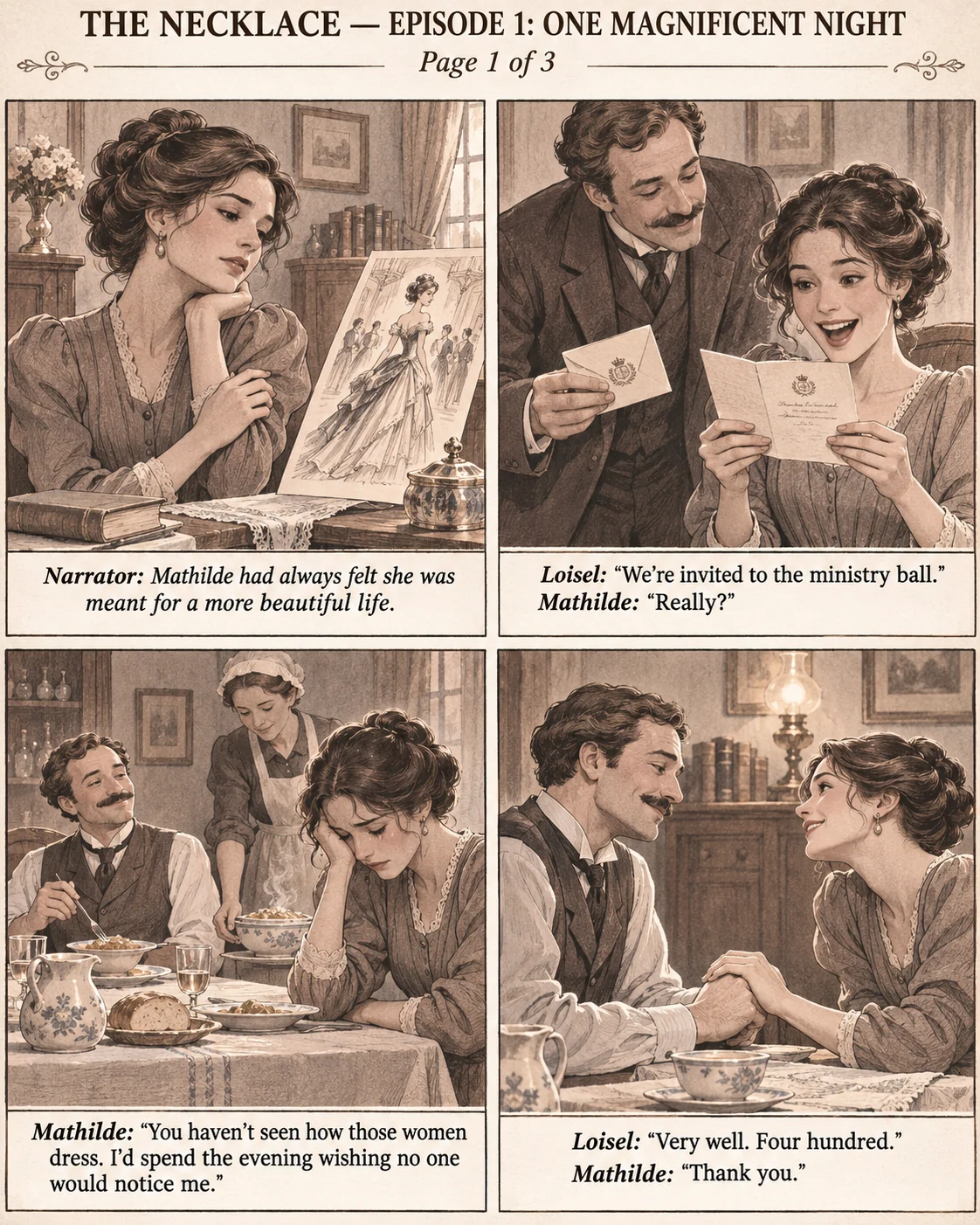
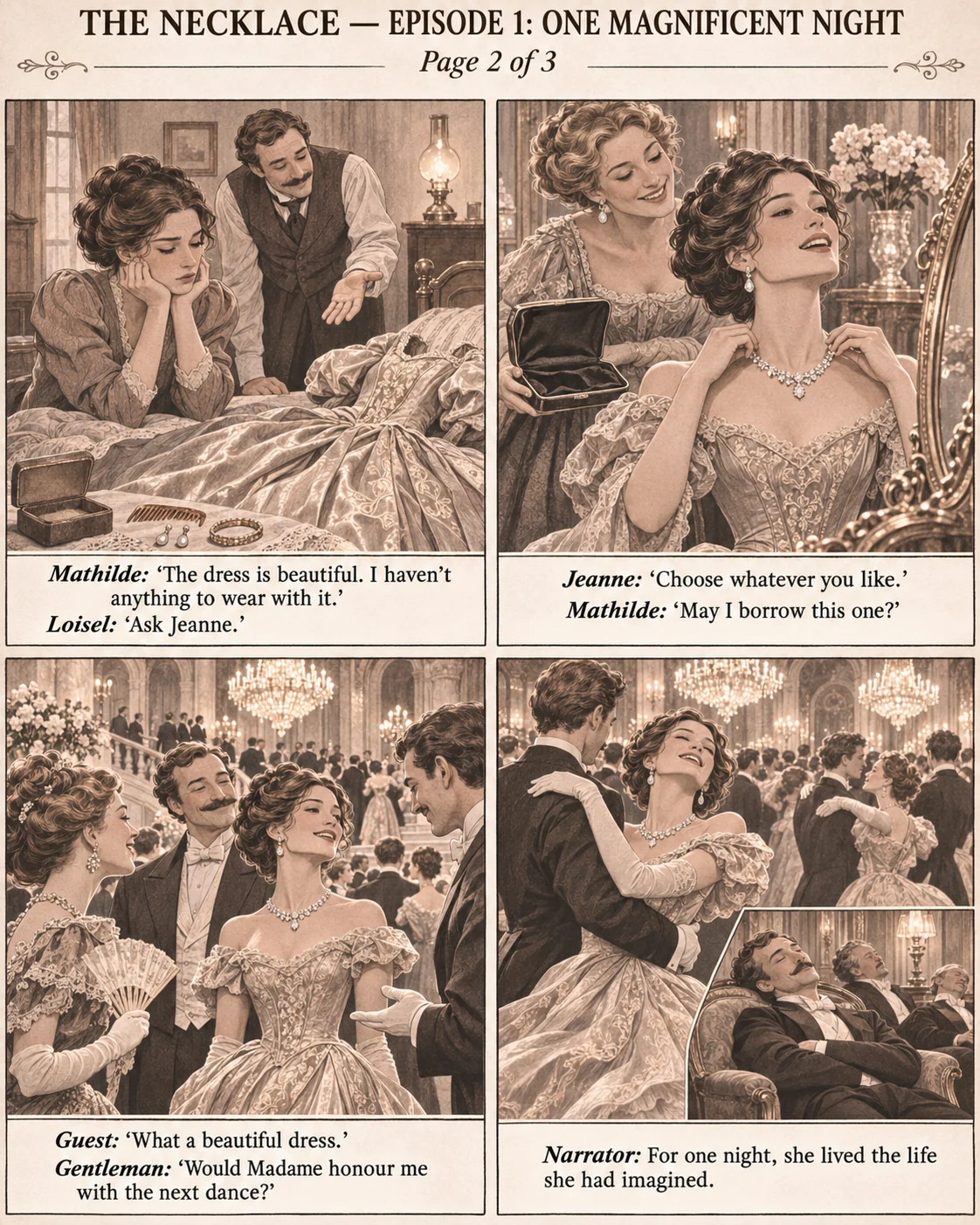
Storyboards
Planning shots and sequences before production.
Evidence
Storyboards
 Open full size
Storyboards
 Open full size
Storyboards
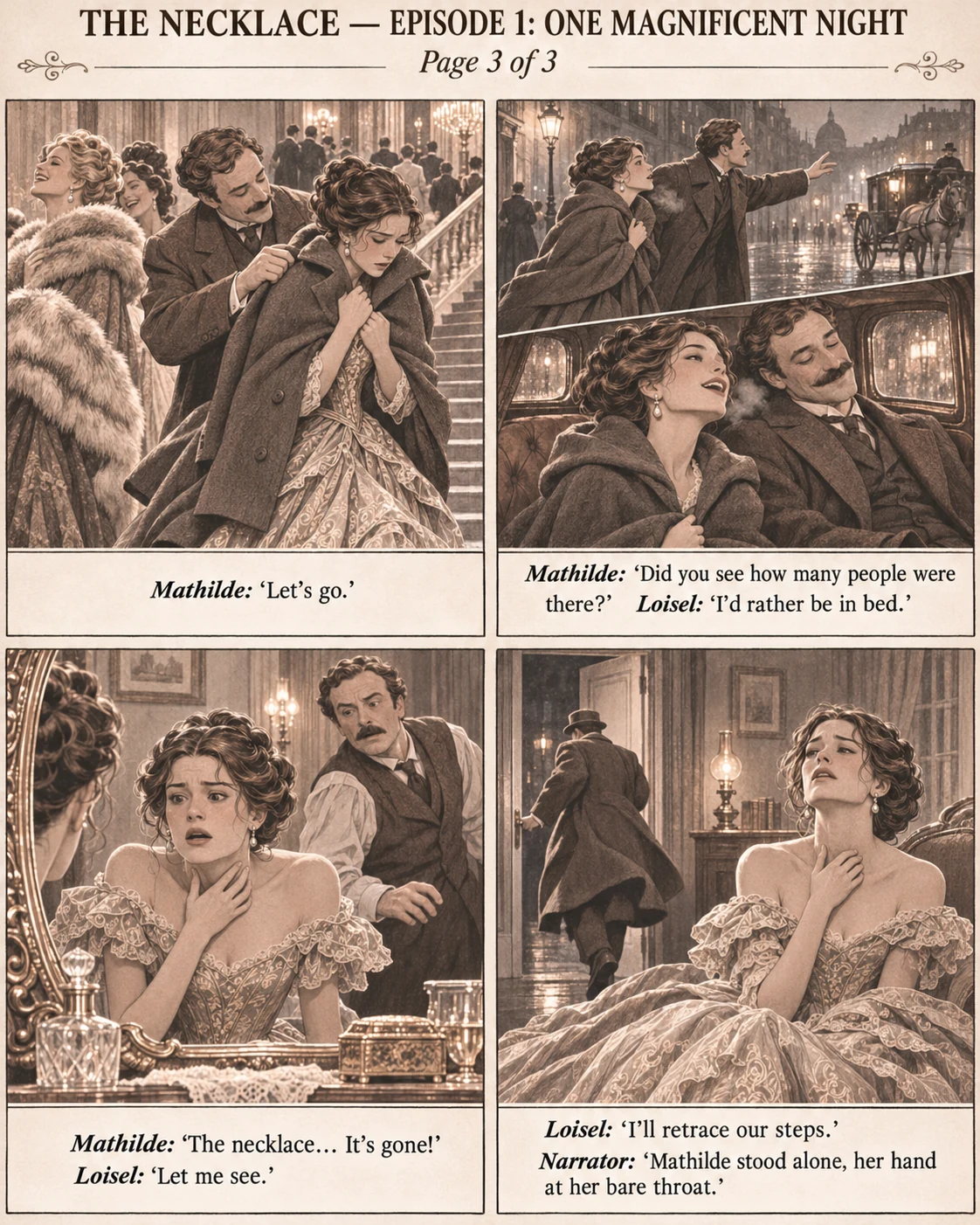 Open full size
Storyboards
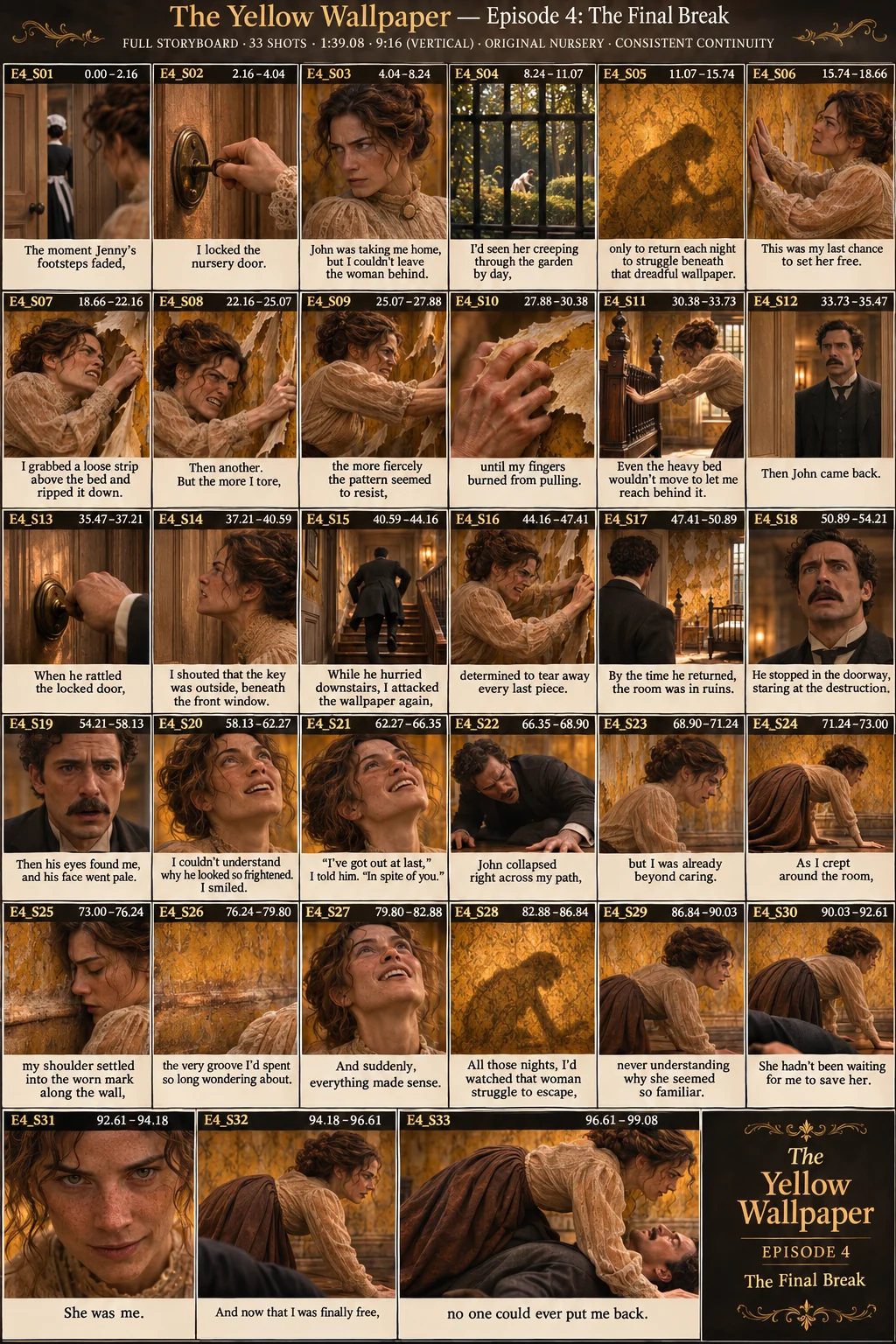 Open full size
item 01 of 04
03 · Visuals
A consistent visual world is designed and held across every episode.
Character design
Defining each character’s appearance through successive iterations.
Costume
Costume studies for each character and period.
Locations & environments
Developing the settings and their atmosphere.
Visual continuity
Comparing scenes so characters and places stay consistent.
Evidence
Character design iterations
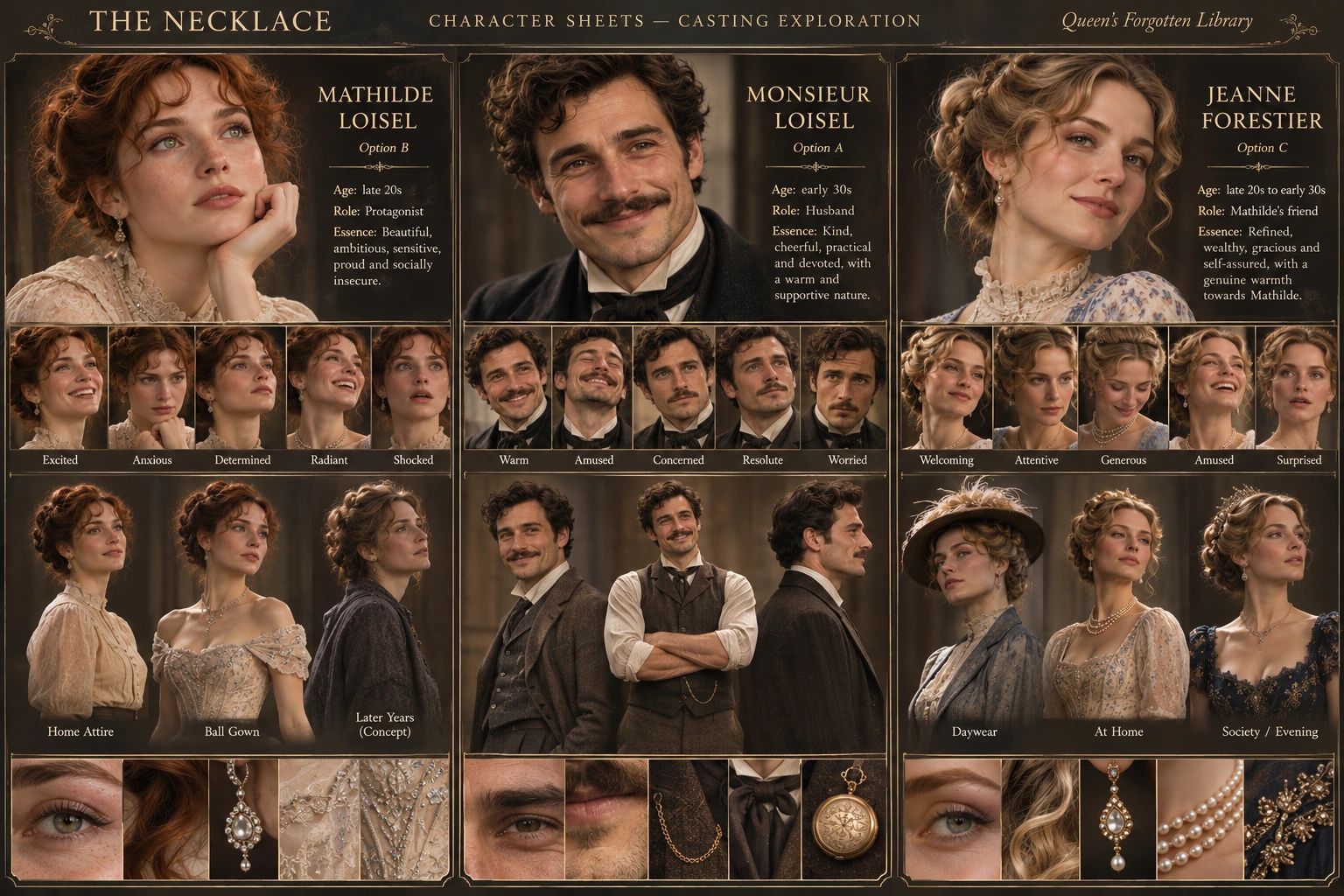 Open full size
Location development
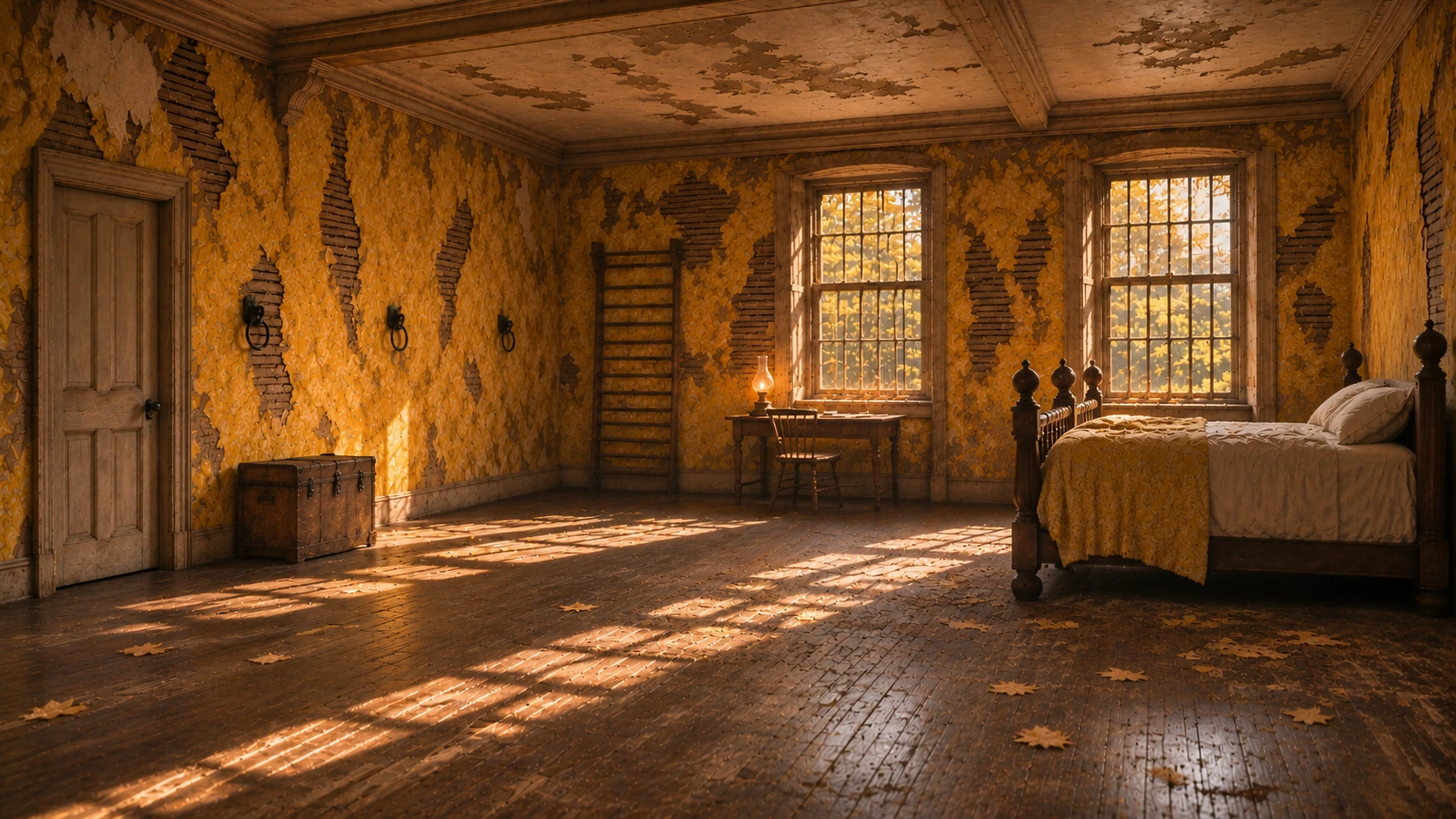 Open full size
Visual concept exploration
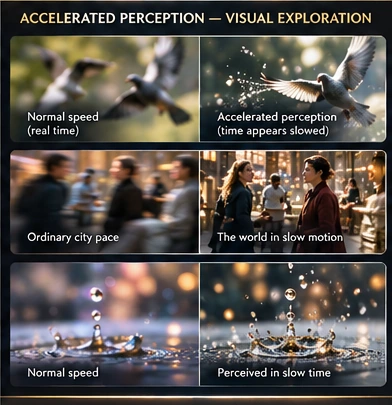 Open full size
item 01 of 03
04 · Editing
Scenes are composed and paced into finished cinematic episodes.
Scene composition
Framing and staging each shot.
Cinematic techniques
Camera movement, light and transitions that carry the mood.
Pacing
Rhythm across scenes and episodes.
Sound
Music, voice and atmosphere.
05 · Publication & Distribution
Finished episodes are prepared for release and shared with audiences.
Release preparation
Final versions, titles and descriptions for each episode.
Channel formats
Adapting each release to the format of its channel.
Distribution
Publishing across video and social channels.
Library placement
Adding the finished production to the digital library.
04Featured production
The Yellow Wallpaper.
An episodic cinematic adaptation of Charlotte Perkins Gilman’s 1892 gothic story.
05Development
From prototype to independent platform.
Existing
Interactive prototype
Hosted on ChatGPT: the Garden, collections, story discovery and a personal library saved on the visitor’s device.
In development
Independent website
A standalone platform, separate from the hosted prototype. Not yet deployed.