
01Academic research
Automating the clash management process through machine learning.
A conceptual framework for end-to-end clash management, connecting machine learning, expert knowledge and collaborative BIM workflows from detection through to resolution.
Conceptual research — Practitioner-informed framework; it has not been implemented as software or tested on live projects.
- Type
- MSc dissertation and academic poster
- Context
- MSc Building Information Management, University of Portsmouth, 2024
- Methods
- Literature review, practitioner survey, thematic and statistical analysis
- Continued
- Co-authored journal manuscript, not published
01Overview
Intelligent BIM coordination.
MSc Building Information Management · University of Portsmouth · 2024
The challenge
Detecting conflicts between discipline models is only the start of coordination. Reviewing, organising, prioritising and resolving them still depends on substantial expert judgement and coordination across disciplines.
The investigation
A literature review shaped a conceptual framework; a practitioner survey refined it and assessed its perceived relevance and readiness for adoption. Qualitative thematic analysis and quantitative statistical analysis supported the methodology.
The contribution
An interconnected workflow that links clash detection and analysis with resolution generation, collaborative evaluation and proposed model updates — treating clash management as one information and decision-making process rather than isolated automation tasks.
01Concept
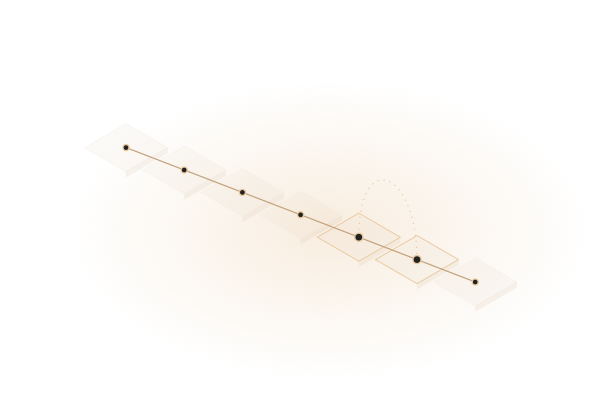
A conceptual clash management workflow.
Seven sequential stages, with expert knowledge and human review running across all of them, and a review-and-refine loop at resolution. Select a stage to read what it would involve.
Expert knowledge informs every stage
- Model setup & detectionConfigure the coordinated discipline models and the rules used to check them, then detect conflicts between them.
- FilteringIdentify the conflicts that are relevant, separating meaningful issues from those that do not need action.
- CategorisationOrganise related issues into groups, so connected problems can be understood and handled together.
- PrioritisationRank issues by their likely impact on the project, so expert attention goes where it matters most.
- Solution generationConsider possible resolution options for each prioritised issue, informed by expert knowledge.
- Collaborative evaluationReview proposed resolutions with the relevant stakeholders. Proposals can be refined and reconsidered before agreement.
- Proposed model updateApply approved changes to the models through a proposed automated update process.
Human review throughout
01Research journey
Research journey.
2024
MSc dissertation and academic poster
Literature review, conceptual framework and practitioner survey.
After the MSc
Continued research
Further analysis, framework refinement and a co-authored journal manuscript.
Future direction
Implementation and pilot testing
Computational implementation and pilot testing are the natural next research steps.
01Outcome
Outcome & next steps.
Achieved
- MSc dissertation and academic poster (2024)
- A practitioner-informed conceptual framework for end-to-end clash management
- A co-authored journal manuscript developed after the MSc (not published)
Current stage
Conceptual research, refined beyond the MSc.
Next step
Computational implementation and pilot testing of the workflow.
Transferable skills
- Research design
- BIM coordination processes
- Machine-learning concepts
- Survey analysis
- Workflow and information design